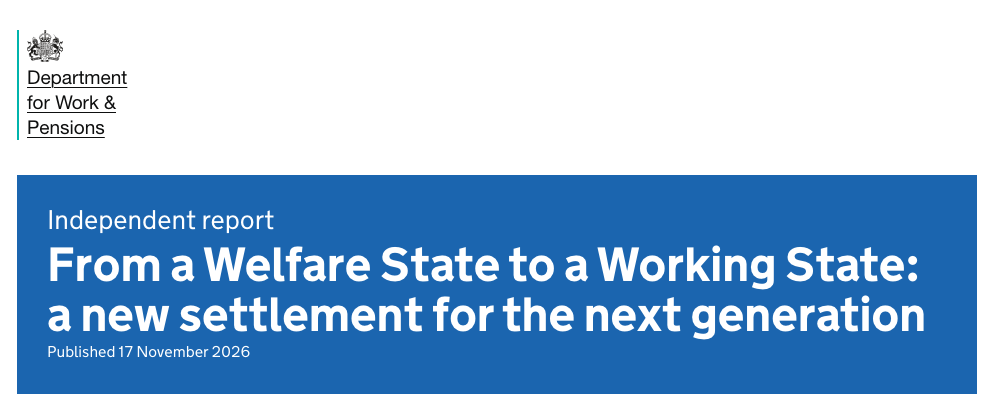
Alan Milburn's long-awaited final report into the growing number of young people not in education, employment or training (NEET) has been published today (17 November).
Titled From a Welfare State to a Working State, the review proposes sweeping changes to education, apprenticeships, employment and welfare. You can read the full report here.
Here are the main recommendations:
- Welfare reform: A major overhaul of the benefits system for under-25s, introducing a new Youth Allowance at the standard Universal Credit rate. Disability-related support would also be restructured, with new allowances and funding replacing existing arrangements for young people.
- Employers' National Insurance: The threshold at which employers start paying National Insurance for workers aged 21 to 24 could rise from £5,000 to £10,000, initially targeting retail and hospitality, to make employing young people more affordable.
- Apprenticeships: A target to double the number of young people completing apprenticeships by 2036, establishing them as a mainstream alternative to university.
- Further education expansion: An additional 150,000 places for 18- to 24-year-olds in further education, alongside greater investment in technical and vocational training. Regional leaders and employers would play a greater role in shaping provision around local skills needs.
- Employer incentives: Businesses could receive £3,000 for recruiting a young person who has been out of work for six months, with additional payments of £2,000 for certain young people facing barriers to employment, including care leavers and those with disabilities.
- Guaranteed opportunities: A proposed legal guarantee that young people aged 18 to 24 will be offered a route into employment, education or training, supported by careers advice, employment assistance and access to health services.
Modelling carried out for the review suggests the reforms could help around 440,000 additional young people into sustained employment by 2036, with approximately 600,000 more participating in education, employment or training overall.
While many of the education and skills recommendations are specific to England, proposed welfare and tax reforms would have wider UK implications.
These are recommendations from an independent review, not confirmed government policy.
This article will be updated as further details and responses emerge throughout the day.